22nd May 2026
Working together to make neighbourhood health and wellbeing a reality
Event report: Neighbourhoods Delivery Hub Community of Practice event: Working together to make neighbourhood health and care a reality - Wednesday 13 May, 2026
On Wednesday 13 May, Kirsteen and Gavin from the It’s All About People team attended the Neighbourhoods Delivery Hub Community of Practice event in London, bringing together health, social care, and system leaders from across the country to share practical learning on integrated neighbourhood teams (INTs) and neighbourhood health. The event focused on how places can move from strategy to delivery by building stronger partnerships, improving collaboration, and creating approaches centred around people and communities.
As part of the afternoon Solutions Marketplace, Kirsteen and Gavin delivered a workshop session on Putting personalisation at the heart of neighbourhood health and care, sharing the It’s All About People experience of embedding strengths-based, relationship-centred approaches across Lincolnshire.

Sharing Lincolnshire’s journey
Our workshop explored a simple but important message: neighbourhood health cannot succeed through structural change alone. If we want integrated neighbourhood teams to genuinely improve people’s lives, we need to organise care and support around relationships, strengths, and what matters to people, not around organisational silos or processes.
We shared how the It’s All About People programme was created through partnership between the NHS, Lincolnshire County Council, the voluntary and community sector, and people with lived experience. Rather than treating personalisation as something new, we recognised early on that many strengths-based approaches had existed within social care and community organisations for years. Our focus, therefore, became bringing these perspectives together into a genuinely integrated way of working.
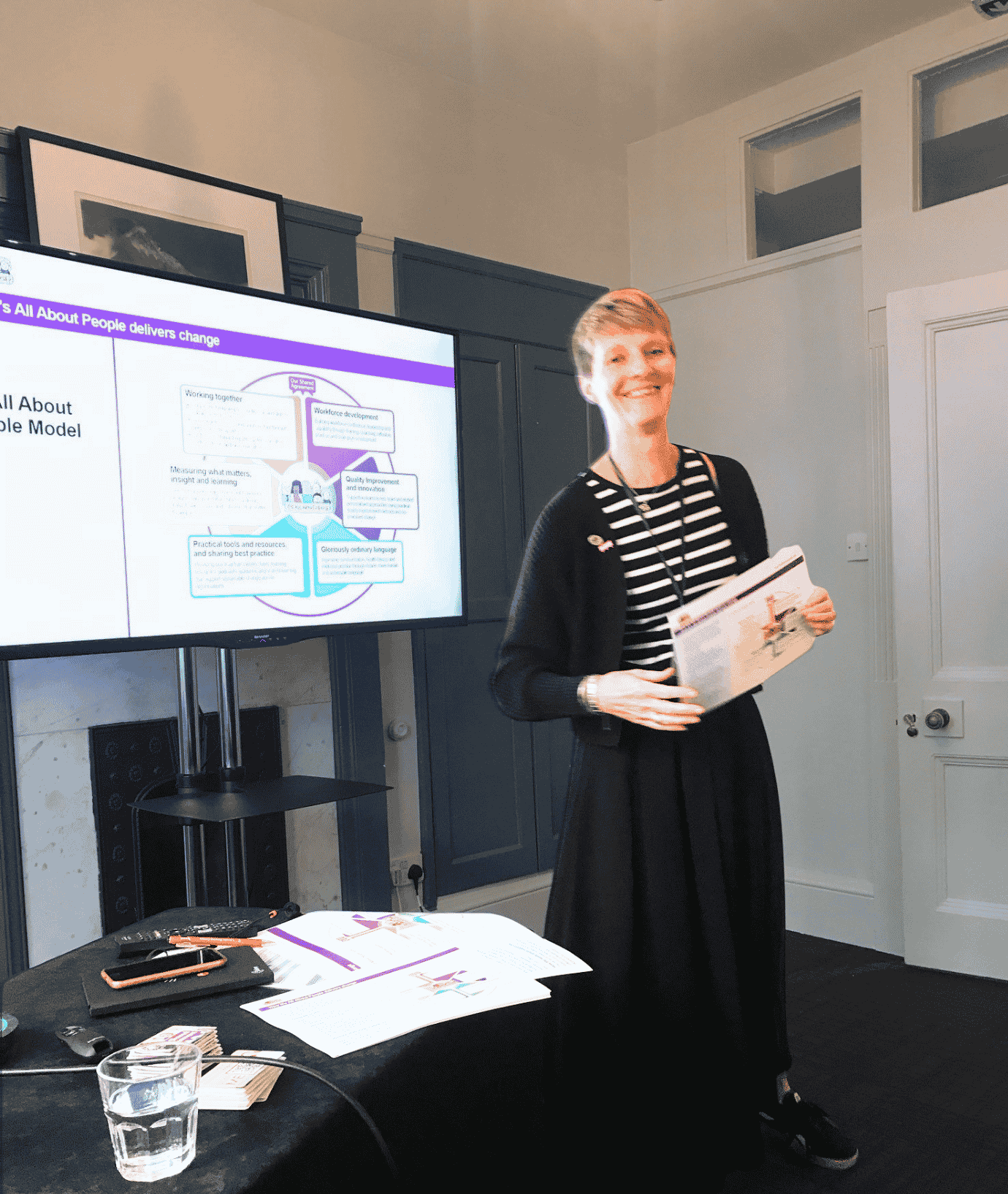
Throughout the session, there was significant interest from fellow delegates in Lincolnshire’s approach to developing Our Shared Agreement (OSA), the co-produced framework describing what good relationships between services, staff, communities and residents should look and feel like. Built around Five Foundations, OSA emphasises listening, collaboration, understanding what matters, and working alongside people rather than doing things to them.
Workshop participants were particularly interested in how relational approaches are being positioned not as an "add-on", but as a core foundation of neighbourhood health and integrated working.
Demonstrating that relationships matter
One of the strongest themes from the workshop discussions was the challenge many systems face in proving the value of personalised and relational approaches.
Across the country, many teams still experience personalisation being dismissed as “soft” or difficult to measure. We shared how Lincolnshire has worked to address this through our Measuring What Matters methodology, combining people’s stories, thematic analysis, and social value approaches to demonstrate impact in ways commissioners and decision-makers can act upon.
The discussion around social value generated considerable engagement, particularly the example showing a £9.71 social return for every £1 invested through personalised interventions. Delegates were interested not only in the financial return, but in the wider principle that stories and lived experience should be treated as evidence, not as anecdotal extras added at the end of reports.
This connected strongly with the wider aims of the event, which focused on how places can create whole-system approaches that genuinely respond to population needs, and measure impact meaningfully.
Building workforce culture across systems
Another major area of discussion was workforce culture and capability.
We shared how, with a relatively small central team, the programme has focused on enabling change through workforce development, reflective practice, champion networks, and practical tools that services and organisations can use themselves.
Delegates were especially interested in the growth of Lincolnshire’s It’s All About People Champions network and the role reflective practice plays in bringing people together across organisational boundaries. Conversations throughout the day reinforced how many systems are grappling with the same challenge: how to create cultures that support collaboration, trust, and shared learning across health, social care and community organisations.
The event repeatedly highlighted that successful neighbourhood health models depend as much on relationships, behaviours and culture as they do on structures, pathways or technology.
Learning from others
Alongside delivering our own session, the event provided valuable opportunities to learn from other places across the country. These included:
- A presentation from Hillingdon Health and Care Partners explored how integrated neighbourhoods and reactive care models are helping create more joined-up support around people with complex needs.
- The Healthier Greenwich Partnership shared how digital health and care technology is supporting independence, prevention and integrated working.
- Suffolk and Norfolk ICB, shared how it is working to create a shared culture through workforce development and communications.
There were also insightful discussions around data sharing, co-production, and the practical realities of integrating health and social care.
One of the clearest messages running through the day was that no single organisation can deliver neighbourhood health alone. Real progress depends on partners being willing to work differently together, share power, learn collaboratively, and build trust across systems.
A powerful panel discussion on health and social care collaboration
A particularly thought-provoking part of the day was the panel discussion on Effective collaboration between health and social care to enable successful neighbourhood health and integrated neighbourhood teams. The session brought together a distinguished panel including:
- James Bullion CBE, LGA Policy Lead and former Chief Inspector of Adult Social Care and Integrated Care at the Care Quality Commission
- Dr Clenton Farquharson CBE, Associate Director of Think Local Act Personal (TLAP)
- Martyn Parker, Assistant Director for Community Protection and Commissioning at Lincolnshire County Council
- Vanessa Odlin, Managing Director of the Goodall Division at Central and North West London NHS Foundation Trust.
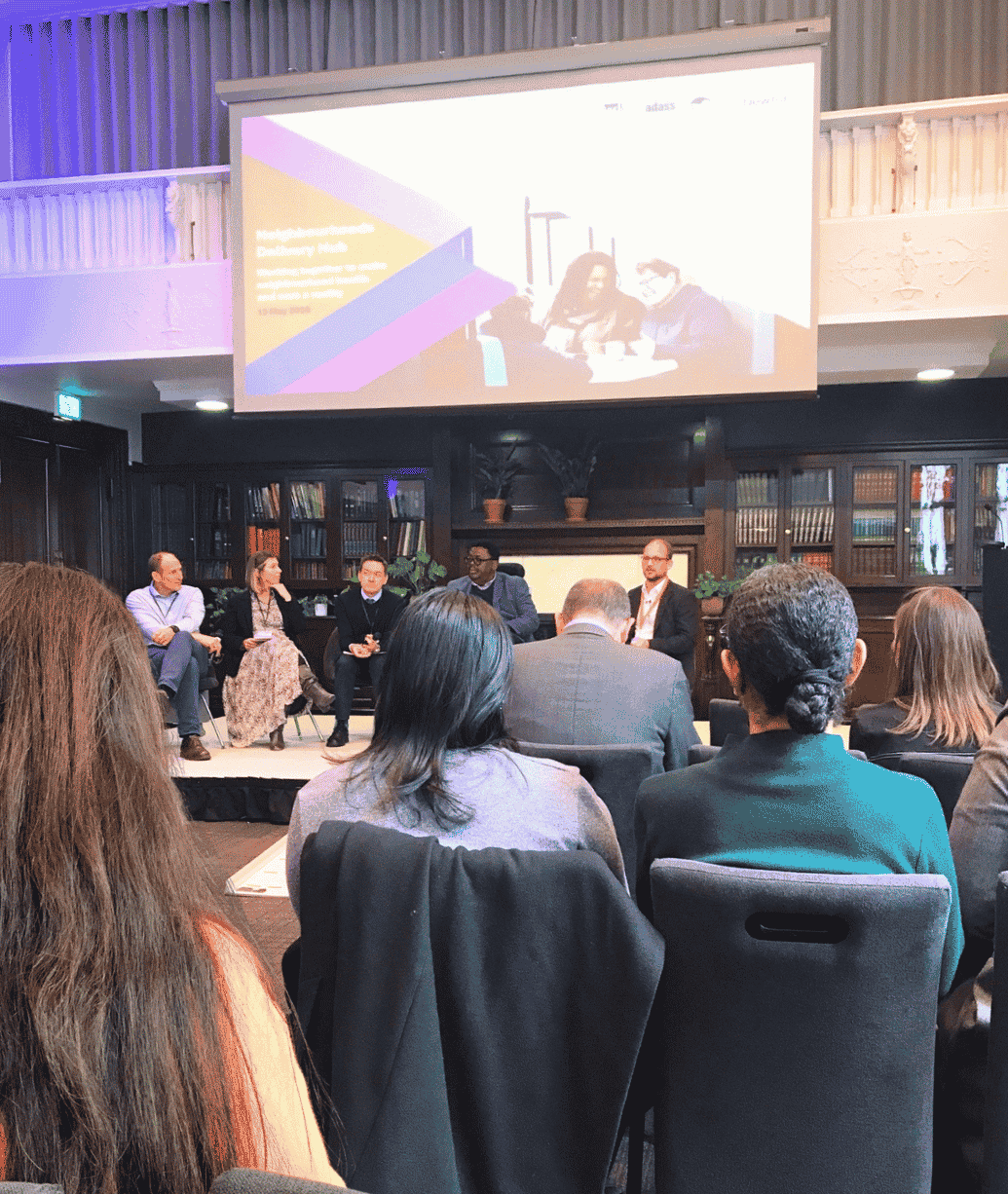
The discussion explored why adult social care must be fully involved in neighbourhood health if integrated working is to succeed. Speakers highlighted that social care brings vital strengths to neighbourhood approaches, including relationship-based practice, prevention, community connection, and a deeper understanding of people’s lives beyond medical need.
There was strong agreement across the panel that neighbourhood health cannot simply become a health-led redesign exercise. Instead, successful integrated neighbourhood teams depend on equal partnership between health, social care, communities, and the voluntary sector, with shared ownership around improving people’s wellbeing.
Dr Clenton Farquharson spoke passionately about the importance of keeping people, lived experience and relationships at the centre of system change, while James Bullion reflected on the need for organisations to move beyond traditional boundaries and siloed ways of working. Vanessa Odlin shared practical insight from Hillingdon’s neighbourhood model, highlighting the importance of integrated leadership, workforce flexibility, and coordinated care around residents with complex needs. Martyn Parker reinforced the role of social care and community-centred approaches within Lincolnshire’s own neighbourhood health ambitions.
Throughout the session, recurring themes included trust, shared language, joint leadership, reflective conversations, and the importance of creating cultures where organisations genuinely work alongside one another.
A growing national conversation
For the It’s All About People team, it was encouraging to hear that many systems nationally are increasingly recognising the importance of personalised, strengths-based and relationship-centred approaches.
There was genuine interest in Lincolnshire’s experience of embedding co-production, health literacy, reflective practice, and lived experience into system transformation work.
Fellow delegates were particularly keen to understand how, in Lincolnshire, relational approaches are moving beyond individual projects and becoming embedded within neighbourhood health strategies, commissioning approaches, and everyday practice.
Importantly, the conversations throughout the day reinforced something we strongly believe in Lincolnshire: sustainable change happens when people feel listened to, valued, connected, and involved in shaping solutions together.
Conclusion
The Neighbourhoods Delivery Hub event highlighted both the scale of the challenge facing health and care systems, and the huge opportunity that neighbourhood health presents when done well.
Across every conversation, presentation and workshop, one message stood out clearly: integrated neighbourhood working is ultimately about people and relationships. Structures, pathways and technology matter, but lasting change happens when organisations work together differently, build trust, and place what matters to people at the centre of decision-making.
For the It’s All About People team, it was hugely valuable to both share Lincolnshire’s learning and hear from others across the country who are working towards the same ambition. The event reinforced that personalisation is not separate from neighbourhood health. It is fundamental to making it work.


