Coaching for change: How Health and Wellbeing Coaches are bringing personalised care to life
As health systems evolve, so too do the roles within them, and one of the most quietly transformative roles emerging across primary care is that of the Health and Wellbeing Coach.
In our recent conversation with Lincolnshire coaches Lisa Melbourne and Emma Batty, the true power of coaching became clear: meaningful change doesn’t start with instructions. It starts with people, their stories, their challenges, and the hopes they hold - sometimes quietly, sometimes desperately - for a healthier life.
Health coaching offers something many people have never been properly given in a healthcare setting: time, space, and permission to explore what really matters to them.
Through their stories, Lisa and Emma show why personalised approaches are not a luxury, but essential to enabling long-term wellbeing.

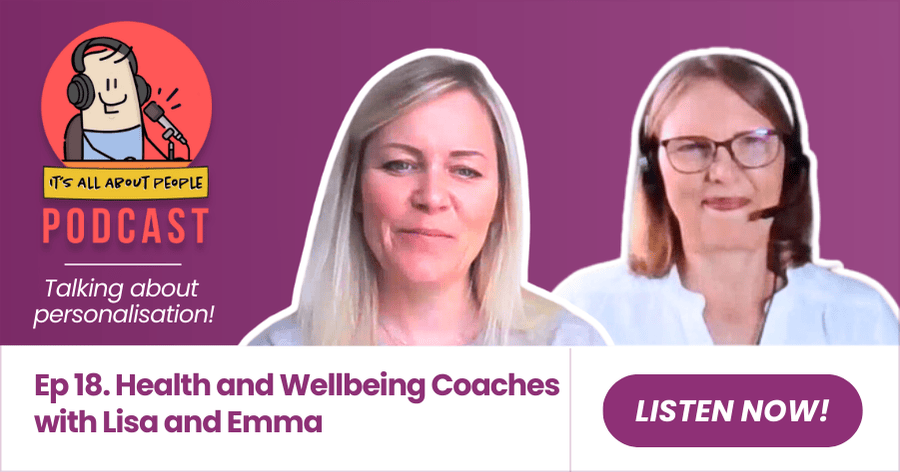
CLICK ON THE IMAGE BELOW to listen to our conversation with Lisa and Emma
A different kind of support “We guide people, we don’t tell them”
At its heart, the coaching approach is gentle, curious, and deeply human. Unlike traditional clinical roles, health coaches work by enabling, not instructing.
Emma: “We guide people… we’re not telling them what to do. We guide people to find their own solutions by open questions… and really listening to what they have to say.”
This distinction matters. In a healthcare landscape where appointments can feel rushed and problem-focused, coaching creates a rare space where people can slow down, connect the dots in their lives, and notice the internal barriers that often stand in the way of change.
Lisa: “We work with the internal dynamics of a person.”
This “internal work” - exploring mindset, emotions, fears, values - becomes the foundation upon which sustainable change is built.
Personalised conversations that go beyond symptoms
Lisa: “We’re here for the conversations people don’t get to have in a GP appointment.”
And those conversations can range widely - lifestyle patterns, emotional overwhelm, fatigue, fear of falling, struggles with confidence, or feeling lost within a long-term condition.
Health coaching recognises that wellbeing is more than medical results. It’s shaped by stress, routine, sleep, relationships, motivation, beliefs, past experiences - whole worlds that don’t fit neatly into ten-minute clinical slots.
Lisa: “If they’re living with a long-term health condition… but they don’t know how to make lifestyle changes, we help create change in their mindset so that it’s very much person-centred.”
This attitude places the person, not the illness, at the centre of the conversation. And when people are supported to reflect on their whole life, not just their symptoms, they can begin to shape new possibilities.
Time to think, feel, and grow
Perhaps the most powerful ingredient in health coaching is something deceptively simple: time.
Emma: “We give people time… in a non-judgemental way and a non-clinical way.”
Coaching sessions can last up to 45 minutes, with up to six sessions available. For many people, this is their first chance to really talk through their experiences without rushing, apologising, or minimising how they feel. It is the difference between coping alone and being heard.
And that time pays off. Coaches see firsthand how small breakthroughs in confidence or understanding can snowball into profound changes, emotionally and physically.
Working alongside Primary Care, not in competition with it
Health coaches are woven into Primary Care Networks (PCNs), but they play a distinct role. They’re not clinicians, counsellors, or social prescribers; instead, they complement all three.
Emma: “Social prescribers work… with the person’s environment… whereas as a health coach, we work very much with what’s important to the person intrinsically.”
Coaches help reduce repeat appointments by getting under the surface of issues that can’t be resolved through medication alone.
Lisa: “It really does help with preventing repeat appointment making… when you can’t get to the root of what needs to change.”
They act as a bridge, supporting people not only to understand their health conditions, but also to engage meaningfully with clinical advice, community groups, or lifestyle adjustments suggested by other professionals.
Making change feel possible: Stories of transformation
The most compelling evidence for personalised coaching lies in the lives of the people who benefit from it.
Emma’s story: Rediscovering control with diabetes
One gentleman Emma supported had long-term, poorly controlled diabetes. He felt exhausted, isolated, and unsure of how to move forward.
Through open questions and space to reflect, Emma helped him recognise what wasn’t working - his diet, erratic mealtimes, and the emotional weight of managing his condition. Together they explored confidence-building strategies so he could start venturing out again and engaging with community groups. He also identified for himself the need to reconnect with his diabetic nurse.
The results were transformative:
“His insulin became more regulated… his diet became more regulated… and the feedback from him was really heartwarming.”
Through coaching, he not only improved his health but also regained optimism, something no prescription can provide.
Lisa’s story: Walking again after fear takes hold
Lisa recalled a woman who had undergone major back surgery and was struggling to rebuild mobility. Her initial referral was for weight loss, but the real barrier was fear - fear of falling, fear of moving, fear of trusting her body again.
Through careful exploration, Lisa helped her break her goals into tiny, manageable steps.
“She just needed to take herself right back to those little steps to gain confidence.”
From walking around her flat for 30 minutes, she eventually walked the full length of Lincoln High Street.
And from that point on, the woman set all her own goals, deciding to walk to a friend’s house instead of taking a taxi, or to expand her activity little by little.
Lisa: “She smashed it out of the park. The weight loss came after that.”
These stories reveal what personalised care can unlock: courage, self-belief, independence, and hope.
Why Personalisation matters: Small steps, big futures
Throughout Emma and Lisa’s reflections, a few principles stood out:
People know more about their own lives than anyone else
Coaching honours that knowledge rather than replacing it.
Small steps create big momentum
Whether it’s standing up, walking a few minutes, or adjusting a mealtime, the smallest actions can reshape a person’s trajectory.
Understanding comes before action
People rarely struggle because they don’t care. They struggle because they feel overwhelmed, fearful, or unheard.
Support should wrap around the person, not the system
Health coaches slot in wherever they’re needed - home visits, community venues, phone calls - meeting people where they are.
Conclusion: Personalised Care isn’t an add-on – it’s the future
The work of health and wellbeing coaches like Lisa and Emma shows what can happen when healthcare moves beyond symptoms and statistics and begins with stories, motivations, and real human needs.
- They offer time.
- They offer space.
- They offer belief.
- But most importantly, they help people rediscover belief in themselves.
Emma: “Any progress that anybody makes is fantastic.”
And that’s the heart of personalised care: recognising that progress looks different for everyone, but matters just as much.
In a system under strain, health and wellbeing coaches provide a breath of fresh air, reminding us that transformation doesn’t come from telling people what to do. It comes from walking alongside them, one small, hopeful step at a time.


