Patient Participation Groups: Shaping services with the people who use them
Patient Participation Groups (PPGs) may not always make the headlines, but when Alison from the It’s All About People team spoke with Vicky Thompson and John Day, it became clear that PPGs play a quiet but powerful role in shaping health services around the people who use them. From rural friendship groups to creative carer support, PPGs are demonstrating that when communities and professionals work with each other, everyone benefits.
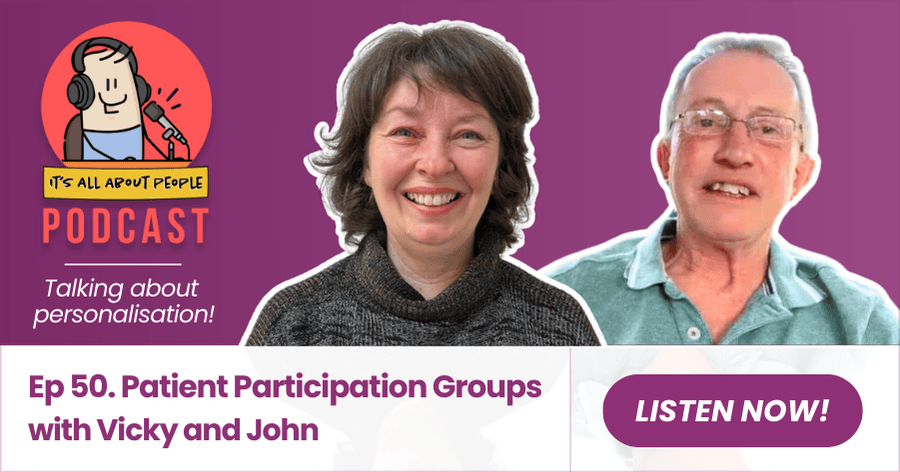
Vicky is Chief Executive of Every-One, a Lincolnshire-based charity that aims to work inclusively with people to ensure that they are at the centre of their own wellbeing. She is also an Expert by Experience. John is an Expert by Experience. Both are active members of PPGs.

CLICK ON THE IMAGE BELOW to listen to our conversation with Vicky and John
Patient Participation Groups: Grassroots partnerships for better care
Patient Participation Groups exist in around 41% of GP surgeries in England and Wales, but their form and energy vary widely. At their best, they become genuine partnerships between patients and professionals.
John describes the basic principle simply: a PPG is “a group of patients… who volunteer to get together to meet to discuss how… we can improve the way that the surgery operates and the way that they help the patients.”
This collaborative spirit - seeing patients as partners - sets the tone for everything that follows. And as both John and Vicky emphasised, the most effective PPGs are built on trust, openness and a shared desire to make things better.
John: “It’s important to get a representation from patients across the whole spectrum…(because) the needs of a young working family… will be different to someone in their 60s.”
Personalisation starts with hearing real experiences from different corners of the community.
Personalisation in action: Co-production, not complaints
A key theme running through the conversation is that PPGs are not about complaining or raising grievances - they are about co-production.
Vicky: “I would want to apply co-production principles… so I’m trying to make it really about a positive relationship.”
This doesn’t mean ignoring problems. Issues do arise - missed appointments, access challenges, communication gaps - but PPGs bring them into the open and work through them constructively. The tone is supportive, pragmatic, and forward-looking.
John captured this balance perfectly: “It’s not a moaning job… but we can take suggestions and constructive criticism and it is readily received.”
This shift - from feedback about services to feedback with services - is a hallmark of personalised, collaborative care.
Doing things differently: Creativity at the heart of community support
One of the most inspiring parts of the discussion is how creatively PPGs think about supporting people.
Carers’ Coffee Mornings
John describes how his PPG has run free coffee mornings for unpaid carers - events filled with warmth, conversation and support. Nurses join to offer health checks, charities come to share advice, and carers connect with each other.
“It was quite interesting just how many of the carers did not know the amount of support that can be out there for unpaid carers.”
This is personalisation at its best: meeting people where they are, in a relaxed space, and giving them access to support they didn’t even know existed.
Friendship groups for rural older adults
At Vicky’s surgery, community need sparked a different idea - a weekly “Wednesday Friendship Group” for isolated older residents.
The group grew so quickly that members asked for tools to help monitor their health. The PPG responded by purchasing a blood pressure monitor, scales and other equipment.
“They can take each other's blood pressure… and they know that if there’s anything of any concern that they go to the GP practice.”
The result is a simple but profound form of empowerment - local people taking charge of their wellbeing with gentle safety nets in place.
The Ripple Effect: How local action influences system-wide change
Our conversation with Vicky and John also highlighted the growing connection between local PPGs and wider health structures.
Each PPG not only works within its surgery but links into county-wide patient councils and digital co-production groups. These forums provide updates on things like the NHS App, share learning, and create consistent messages across Lincolnshire.
Alison: “It really is making the most of what’s available and working together for the wellbeing of everybody.”
Vicky takes this further, suggesting PPGs represent an untapped “army of people across the county… connected in so many different ways in the local community.”
Harnessing this grassroots network could drive real cultural change, especially around personalised care and co-production.
Breaking down barriers: Making PPGs accessible to everyone
One of the challenges PPGs face is attracting younger or working-age people who may not have time to attend meetings.
John: “It’s difficult… but it’s important to get a representation across the whole spectrum.”
John’s PPG is exploring new approaches, from flexible meeting times to alternative ways for people to contribute without attending in person. Personalised care also means personalised participation, and adapting the PPG model is key to reaching a broader community.
Alison’s joke about getting John to do a TikTok dance underscores the real point: new audiences need new approaches, and thinking creatively is part of the journey.
The power of volunteering: “You can make a difference”
Volunteering ran like a golden thread through the whole conversation. Both Vicky and Alison paid warm tribute to John’s extensive contributions, and John respondeds with humility:
“It sounds a bit of a cliché… but it’s good to give something back.”
He’s clear that volunteering doesn’t only benefit others - it gives something back to the volunteer too. Purpose. Connection. A sense of making things better.
John: “Anyone that’s tempted to look at some sort of voluntary work, yeah, try it.”
Conclusion: Personalised care starts with people, not systems
This conversation shows that personalised care is not a policy or a target - it’s a mindset rooted in relationships.
Patient Participation Groups embody this beautifully. They thrive on:
- people working together
- listening with curiosity
- creating solutions that reflect local needs
- supporting wellbeing before crisis hits
- embracing the diverse strengths of volunteers
Whether it’s carers’ coffee mornings, community friendship groups or simply creating a safe space for honest feedback, PPGs demonstrate that the most meaningful improvements often start with small, human gestures.
Vicky: “I know that services don’t always get it right, but I firmly believe in the benefits of working together with people to make things better for all.”


