7th March 2026
Welcome to the Museum of Invisible Impact!
Last week Caty from the It's All About People team joined Rob Dean from the University of Lincoln at the Prevention Research 2026 Conference in Birmingham.
Together, they facilitated a workshop arising from Rob’s work to demonstrate the importance of human outcomes that are often ‘hidden’ from systems that are solely metrics-driven, and how these outcomes are a crucial indicator of cost-effectiveness.
Rob’s research into social prescribing aligns strongly with the It's All About People Measuring What Matters project, so the joint workshop was an opportunity to showcase both areas of work to a wider audience across the health research community.
Prevention Research 2026 was organised by Population Health Improvement UK, UKPRP Prevention Research Network, and the National Institute for Health and Care Research to explore the latest research and collaborative strategies for preventing non-communicable diseases and reducing health inequalities across the UK.
One of the speakers at the conference presented a hopeful vision:
“A world where human and planetary health and equity are prioritised, where health and prosperity go hand in hand, and where the structural changes needed to realise these aims are prioritised, enabling everyone to lead healthier, happier lives in a fairer society.”

More about the Museum of Invisible Impact
Indicators such as service uptake, reduced GP visits, or short-term improvements in wellbeing scores are often prioritised because they are easily measurable and comparable. The risk of this is that the kinds of changes that really make a difference to people’s self-efficacy, choices, and behaviours are not prioritised.
These changes are often fragile, subtle, and relational (i.e., the rebuilding of trust, the emergence of a sense of belonging after years of isolation, or confidence gained from trying something new). They are also crucial indicators of whether a service or intervention is truly effective in terms of improving wellbeing, preventative care, and reducing health inequalities.
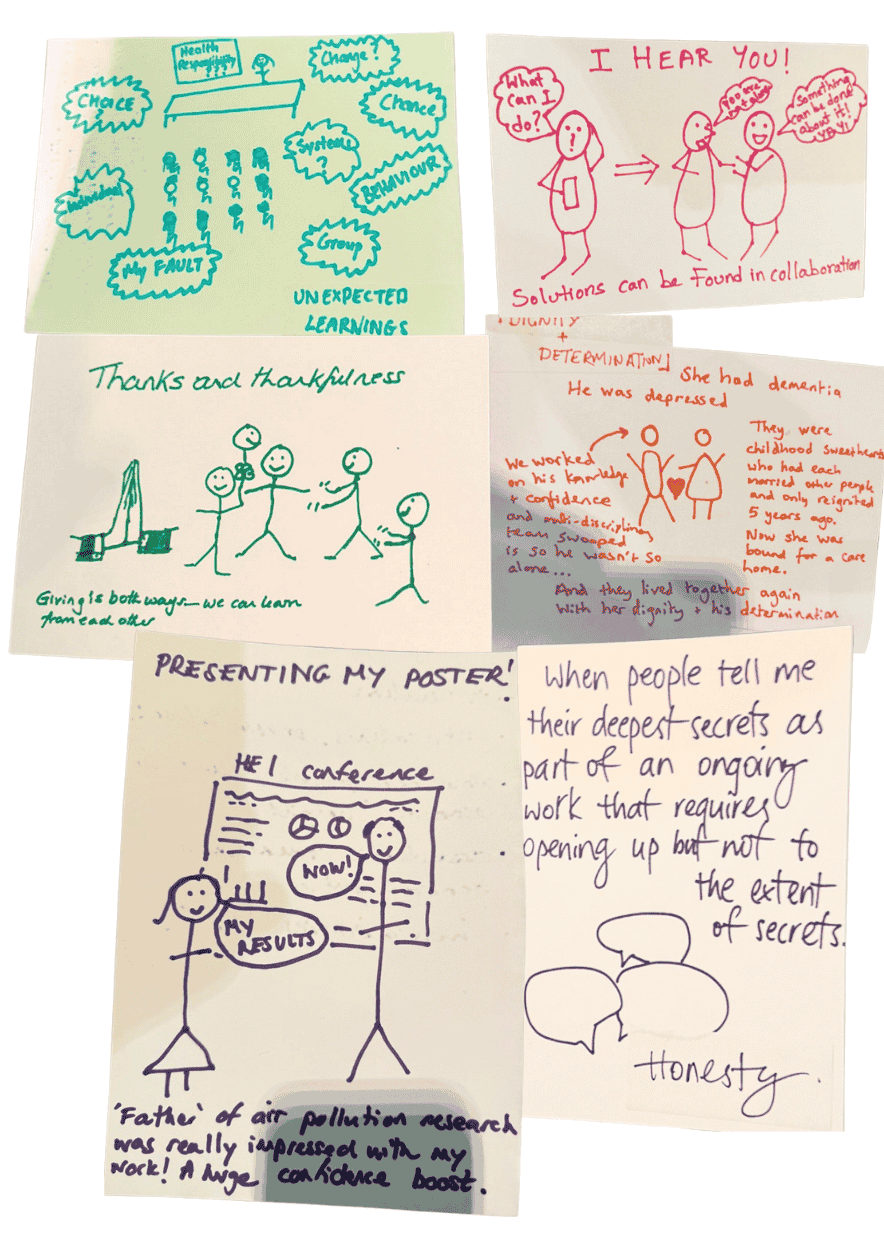
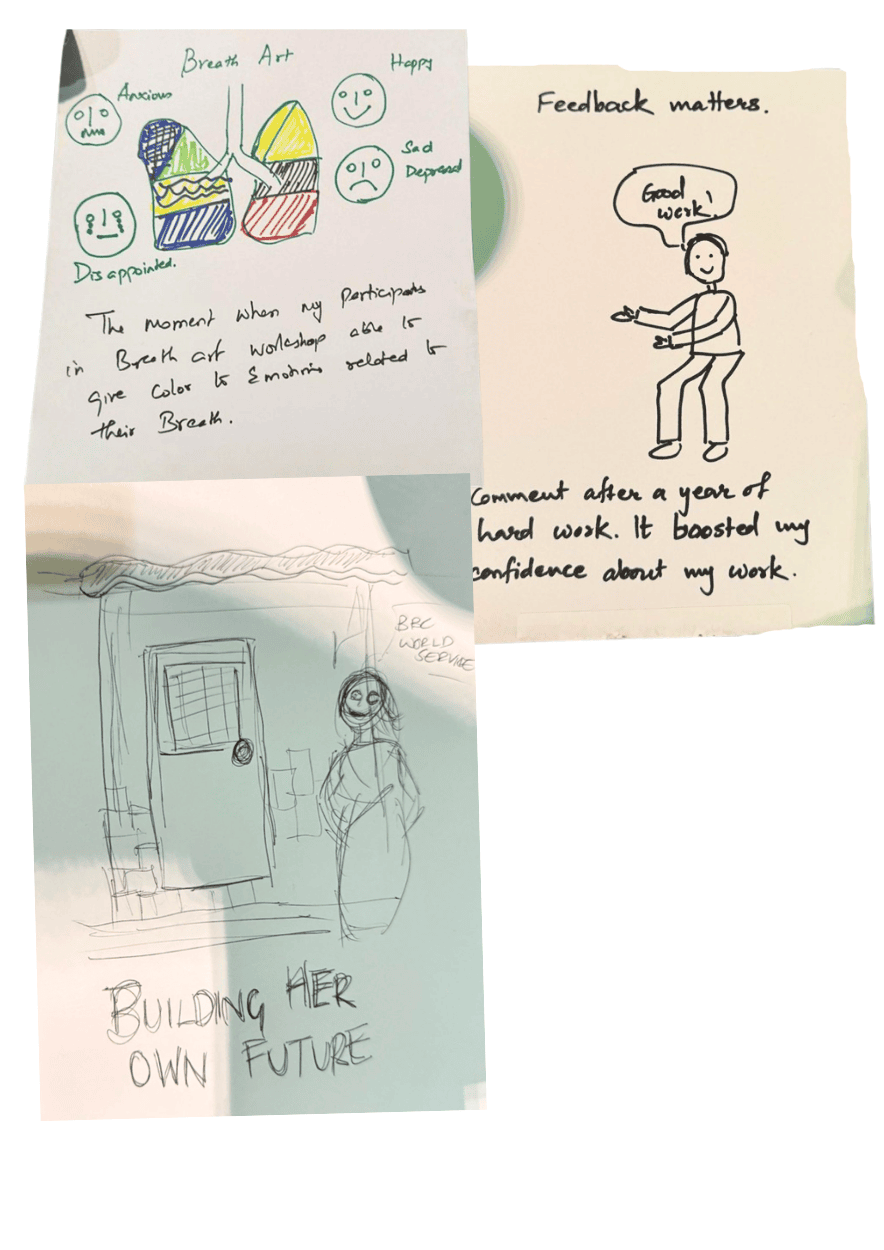
The Museum of Invisible Impact workshop is an interactive opportunity to make what is overlooked more visible, and demonstrate how qualitative methods can capture the kinds of evidence that numerical metrics miss.
The evidence gathered reveals the ways of working that lead to positive impacts and ripple effects that are difficult to represent in purely monetary terms, yet are fundamental to people’s long-term health and system sustainability.
Below are 'Exhibits' created by conference delegates during the Museum of Invisible Impact workshop.