Reimagining the Continuing Healthcare journey
Introduction
In Lincolnshire, the It’s All About People team has worked closely with Continuing Healthcare (CHC), Adult Social Care, and wider system partners to reimagine the CHC journey. This work has been shaped by a shared ambition to make the process more person-centred, transparent, and better connected.
Central to this has been the vision set out earlier this year by Helen Sands, Head of All-age Continuing Healthcare (CHC), who identified the need to improve the experience and outcomes for individuals, families, and staff navigating what can often be a complex process.
Why this work matters
Continuing Healthcare (CHC) is a fully NHS-funded care package for people with complex, long-term health needs. However, the process is often experienced as bureaucratic and impersonal, especially during moments of vulnerability.
Over the past year, the number of complaints and disputes has risen, leaving staff feeling demoralised and misunderstood - often described as “always feeling like the bad guys.”
This programme aims to change that narrative by focusing on what truly matters: people.
How the work has been undertaken
Acting as facilitators and enablers of this work, the It's All About People team has helped create the space for honest reflection, collaboration, and system-wide learning.
This work began with a Listening phase, where staff insights highlighted challenges such as task-driven processes, communication gaps, and limited time for meaningful conversations, alongside a strong desire to focus on what matters most to people.
Through a collaborative 10-week Process Mapping phase, partners explored the complexity and duplication within the current pathway, recognising that individuals’ experiences can become lost within the system.
Alongside this, Workforce and Public Engagement Surveys captured lived experience, identifying strengths but also inconsistencies in communication, awareness, and involvement in care planning .
These insights were brought together in the “So What” session (March 2026), shaping shared priorities for change.
Together, this partnership approach has provided a strong foundation for redesigning the CHC journey around people’s needs and experiences.

Listening Phase
This work to reimagine the CHC journey began with a crucial Listening Phase, led collaboratively by the It’s All About People team, CHC, and Adult Social Care.
Through conversations with CHC staff, attendance at team meetings, and early engagement activity, colleagues shared honest reflections on both strengths and challenges within the current system.
Some clear insights and themes emerged:
-
"Our approach can sometimes feel too task-driven and focused on ticking boxes, which means the person’s voice and story can get lost."
-
"Team members have different understandings of what personalised care really is, and what it can offer and help to achieve."
-
"We want to build closer, more collaborative relationships with external partners."
-
"National policies can sometimes limit how flexibly we’re able to work."
-
"Limited time makes it hard to build the trust and rapport that person-centred care depends on."
-
"Communication gaps exist between services along the pathway."
-
"Strengthening communication within and across teams will help us work as one, united by a shared purpose."
Importantly, this phase established a shared set of priorities:
-
Make time for meaningful conversations, focused on “What matters to you?” rather than “What’s the matter with you?”
-
Explore people’s strengths and support networks to build on what already works well for them.
-
Embed shared decision-making so individuals and families can make informed choices about their care.
-
Strengthen collaboration and communication across teams and with partners.
-
Work proactively to reduce complaints and disputes by improving clarity, empathy, and consistency.
-
Use resources wisely, reducing waste while increasing overall impact and effectiveness.
These insights, along with feedback from the CHC Quality Assurance Team, are being used to shape the future of the service as person-centred, connected, and driven by a shared purpose.
Process Mapping Phase
Building on the foundation of the Listening Phase, and recognising the need for a whole-system approach, the CHC and Adult Social Care teams embarked on a process to develop a detailed and shared understanding of the current pathway.
Read Reflections on the CHC Process Mapping phase for a more comprehensive account of this work
Over ten weeks, twelve facilitated sessions explored seven key steps or parts of the CHC pathway, from first conversations about eligibility through to reviews and disputes.
Crucially, this wasn’t a paper exercise. It was a chance for all partners involved in the pathway to listen, challenge, and think differently together.
These sessions were led and supported by Paul Holmes, Innovation Lead at Health Innovation East Midlands.
Initial sessions explored the current state of each pathway step, while following sessions encouraged participants to consider the future state.
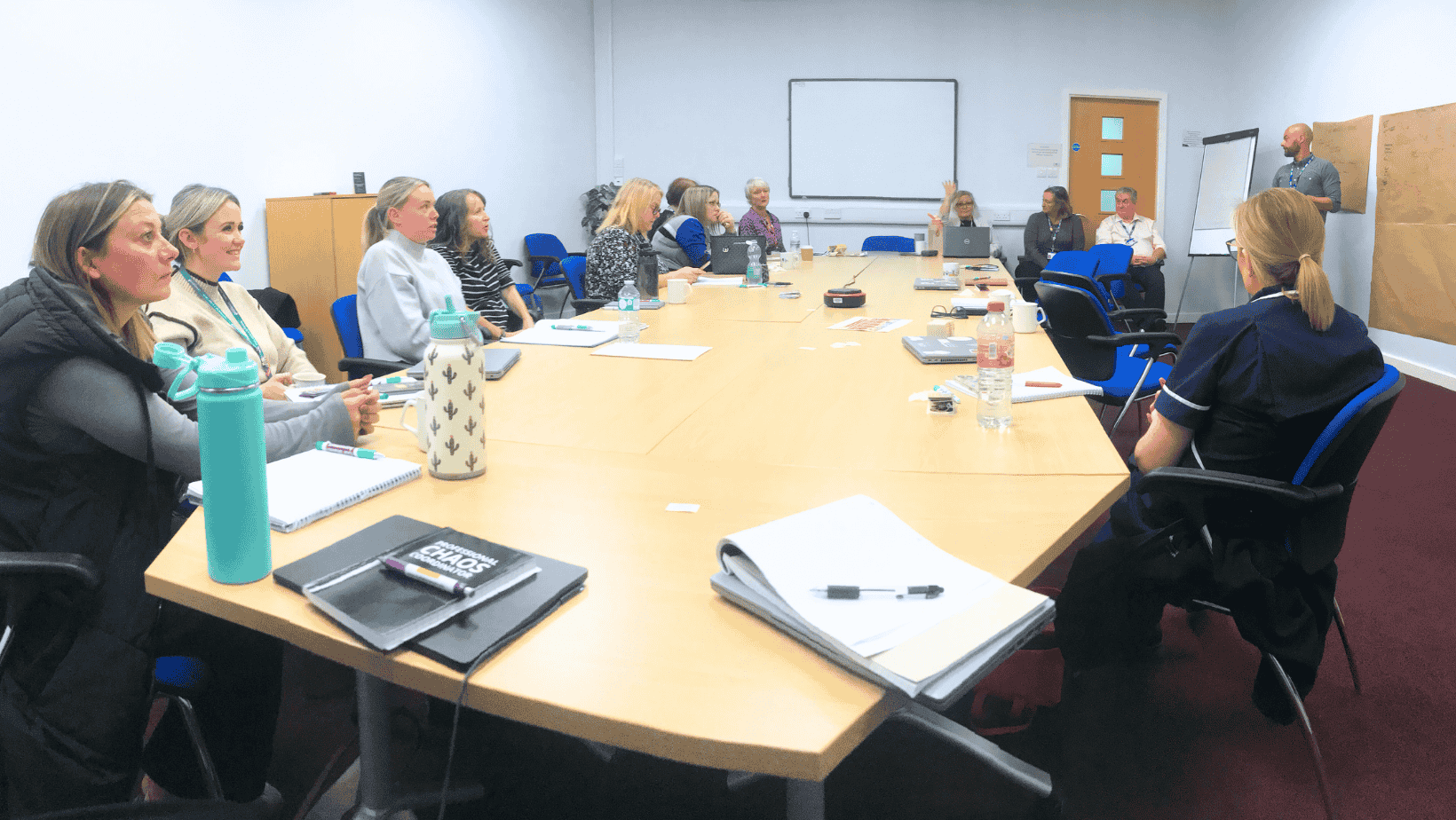
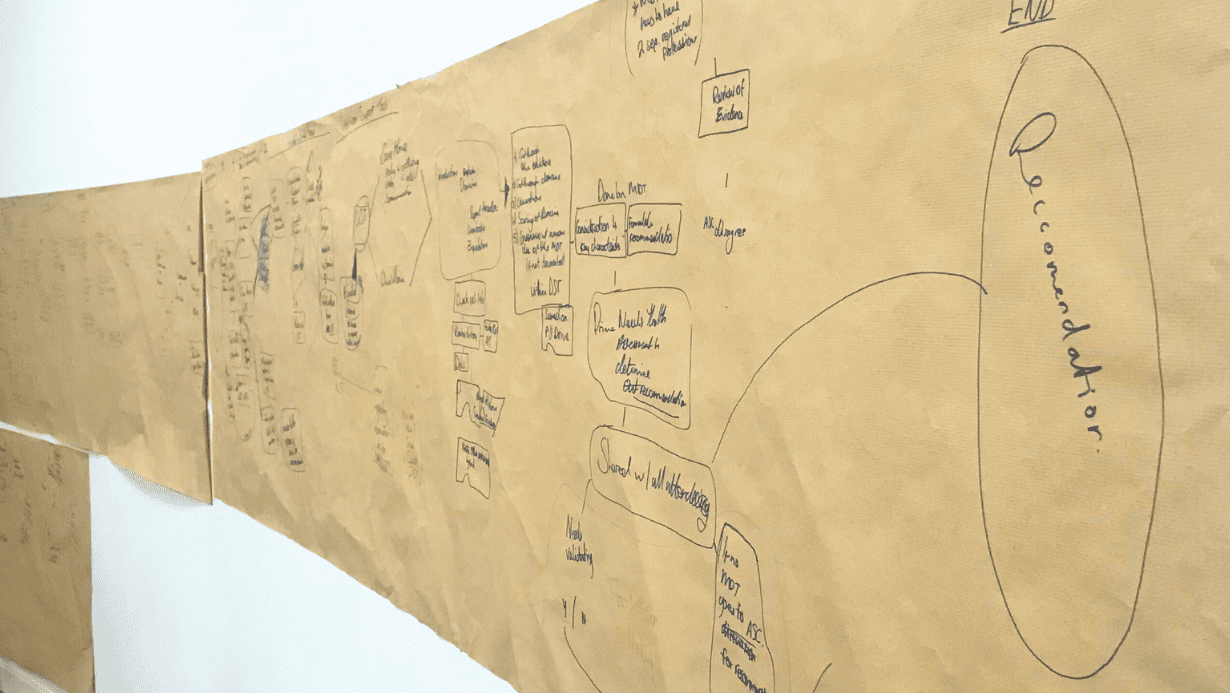
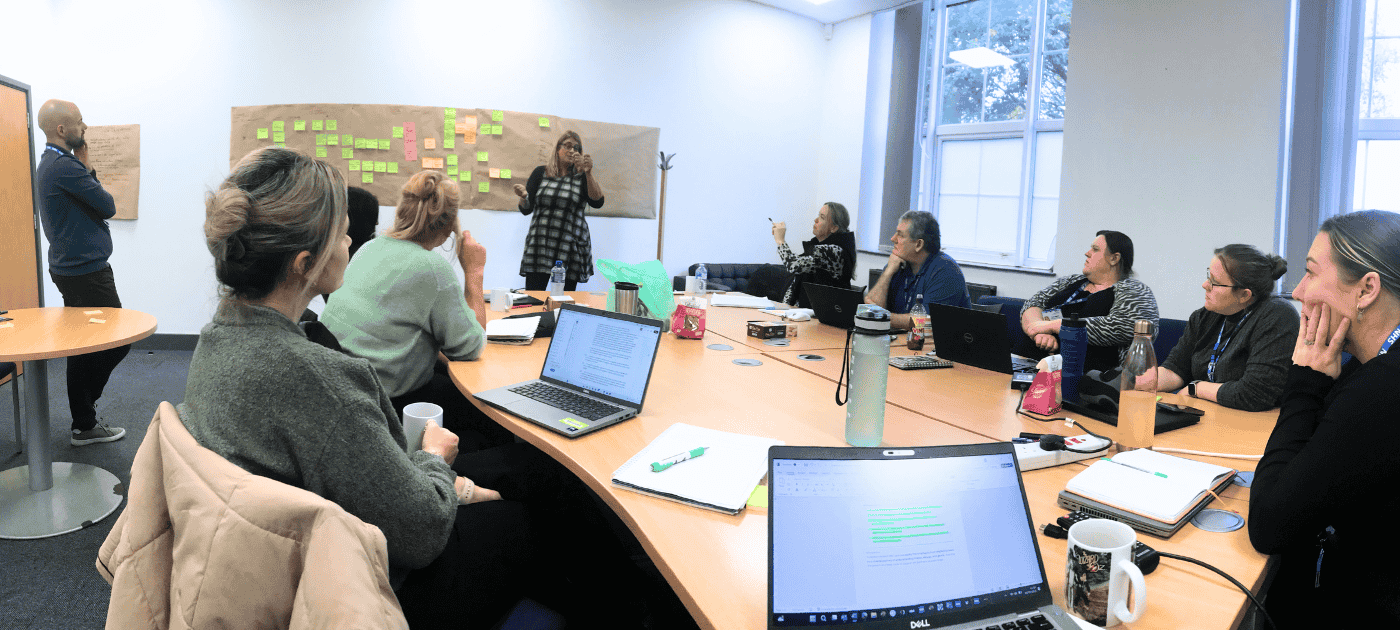
The Process Mapping Phase marked a significant shift from a process-driven approach to one focused on people. Participants began to question not just how the CHC pathway works, but how it feels for individuals, recognising that key touchpoints with people had not been fully considered in the existing system design. One pivotal moment came three hours into a session to map the current decision-making process, when the question was asked, “We've not mapped the touch points with people in this process - where are they?”
The mapping sessions created space for honest reflection and “lightbulb moments”, challenging assumptions about practice, duplication, and decision-making.
A deeper understanding of the whole system emerged, highlighting fragmentation, limited continuity, and missed opportunities to build relationships and trust, particularly where individuals meet professionals for the first time at assessment stages.
Importantly, the sessions also recognised what works well, reinforcing the value of existing good practice. Alongside this, participants identified practical “quick wins” to reduce delays and improve experience.
Overall, the phase fostered collaboration, curiosity, and momentum, creating a shared commitment across partners to redesign the CHC journey around people rather than processes.
Read Reflections on the CHC Process Mapping phase for a more comprehensive account of this work
Workforce and Public Engagement Surveys
Running alongside the Process Mapping sessions, Workforce and Public Engagement Surveys captured the lived experiences of both staff and those accessing CHC.

Staff feedback demonstrated strong professional commitment and confidence in core processes, alongside challenges relating to communication, interagency working, and capacity.
Public feedback reinforced these themes, highlighting inconsistent communication, limited awareness of CHC, and a need for greater involvement in decision-making and care planning.
Together, these insights point to a clear and consistent message: while there are strong foundations, the current system does not always deliver a consistently personalised experience.
Read a summary of the CHC Workforce and Public Engagement Surveys Findings
Process Mapping – “So what” Session
On 5 March 2026, a “So what” session was held to reflect on the outcomes of the three-month CHC Process Mapping phase of the project. The session aimed to share key learning from the work, highlight the actions emerging from these insights, and invite reflections from colleagues across CHC, Adult Social Care, and wider partner organisations.
Key findings
- The CHC pathway is complex, fragmented, and inefficient, with duplication, delays, and non-value-adding steps.
- Communication is the dominant challenge, including unclear messaging, poor coordination between teams, and limited engagement with individuals and families.
- Workforce feedback highlights variability in practice, need for upskilling, and limited capacity for meaningful “what matters” conversations.
- Public awareness of CHC and Personal Health Budgets is low, with a need for clearer, earlier information and consistent practitioner relationships.
- The process has been overly system-focused, though recent work has helped refocus on person-centred care and collaboration.
- Wider system challenges include IT limitations, commissioning complexity, and gaps in advocacy and information access.
Actions underway
- Nurse diary restructuring to improve preparation, continuity, and personalisation of care.
- Fast Track pathway pilot and dedicated working group established.
- Redesign of Funding Without Prejudice processes to reduce delays and streamline workflows.
- Removal of joint funding panel to eliminate duplication and support MDT-led decision-making.
- Strengthened CHC - Adult Social Care collaboration through improved system access and joint forums.
Future work
- Development of a system-wide communications plan and improved public information.
- Establishment of co-production groups and ongoing shared learning (Community of Practice).
- Emergency funding pilot and alignment of CHC procedures.
- Expanded training, including direct engagement with care homes.
- Continued focus on integration, relationship-building, and embedding person-centred practice.
Wider system opportunities, challenges, and feedback
- Structural barriers (e.g. IT systems, commissioning, advocacy, arbitration) remain outside immediate local control.
- Positive cultural shifts include more person-centred language, improved relationships, and better mutual understanding across teams.
- Early improvements seen in practice, including more person-centred DSTs and stronger CHC–ASC communication.
- Recognition that transformation will take time, requiring strong leadership commitment to sustained change.
Next steps & overall conclusion
- Share outputs widely, maintain engagement, and continue gathering feedback.
- Progress co-production and maintain visible, open leadershi
The programme has been challenging but impactful, influencing wider systems and reinforcing a commitment to person-centred redesign.


