Preventing suicide in Lincolnshire: Why listening to lived experience matters
Preventing suicide is not something any one organisation or professional can do alone. It starts with conversations, relationships, and truly listening to people’s experiences. In Lincolnshire, a growing movement is showing how personalised, strengths-based approaches, built around compassion, co-production, and human connection, can make a real difference.
In a recent It’s All About People podcast episode, Alison spoke with Kate Cooper and Ellie Gallacher from Lincolnshire County Council’s Public Health team, alongside Di and Kev Brown, who shared their lived experience following the loss of their son, Matthew, to suicide.
Together, they explored how people with lived experience are helping shape suicide prevention work across Lincolnshire, and why working with people, rather than simply designing services for them, matters so much.
For more information about the Preventing Suicide in Lincolnshire campaign, and how you can get involved, see the section at the bottom of this page.

Co-production creates better support
At the heart of Lincolnshire’s suicide prevention work is a commitment to co-production. In April 2025, Lincolnshire established a Lived Experience Forum as part of its suicide prevention strategy, bringing together people who have personal experience of suicide and bereavement to help shape prevention efforts across the county.
For Kate, involving people with lived experience has fundamentally changed how work is developed: “Sometimes, from a professional point of view, you have these ideas of some of the ways that we potentially need to go about doing things. But when we discuss it at our forum with our members, they will come back and really have some valid comments about actually, you know, "we think it should be done like this".”
This reflects a key principle of personalised and strengths-based care: the people most affected by services often hold the greatest insight into what really works. Rather than being treated as passive recipients of support, people become equal partners in shaping solutions.
Kate described lived experience as “the most important thing to be able to embed to make sure that ultimately we get it right.”
Turning grief into purpose
For Di and Kev Brown, joining the forum came after the devastating loss of their son, Matthew, in 2021. Their decision to use their experiences to help others reflects enormous courage, but also demonstrates the power of strengths-based approaches, recognising people not only through what has happened to them, but through the strengths, insight, and compassion they can bring.
Di: “I felt that if I could help in any little way just to prevent one other person from taking their life, then I was up for that.”
Following Matthew’s death, Di completed a degree in Creative Writing at the University of Lincoln, using her dissertation to explore her experiences. That work later led to an invitation to join the forum.
Kev also became involved after recognising how little support existed locally for people bereaved by suicide: “After we’d lost our son, there was nothing. We had no support locally. There were no groups or anything.”
Together, Di and Kev helped establish a local SOBS (Survivors of Bereavement by Suicide) group in Lincoln, creating a safe space where people can talk openly with others who truly understand.
The importance of human connection
One of the strongest themes throughout the conversation was the importance of relationships and connection. Suicide prevention is not only about services and systems; it is about making sure people feel heard, supported, and less alone.
Kev reflected on how speaking with others who had similar experiences helped him process his grief: “To be able to sit and speak to other people who know exactly the thoughts and the feelings and the guilt and all of the issues that go with suicide, to be able to speak to other people is really, really helpful.”
This highlights something often central to personalised care approaches: meaningful support comes through relationships built on empathy, trust, and understanding.
The SOBS group also demonstrates how communities themselves can become part of prevention efforts. Rather than relying solely on formal services, people with lived experience are supporting each other, reducing isolation, and creating spaces where difficult conversations can happen safely.
Starting conversations and reducing stigma
Another major focus of the work in Lincolnshire is encouraging more open conversations about suicide and mental wellbeing.
Ellie explained how the team has co-produced a new signage campaign with members of the Lived Experience Forum. The Preventing suicide in Lincolnshire campaign includes a series of visually striking signs designed to encourage people to check in on others, talk openly, and seek support if they need it.
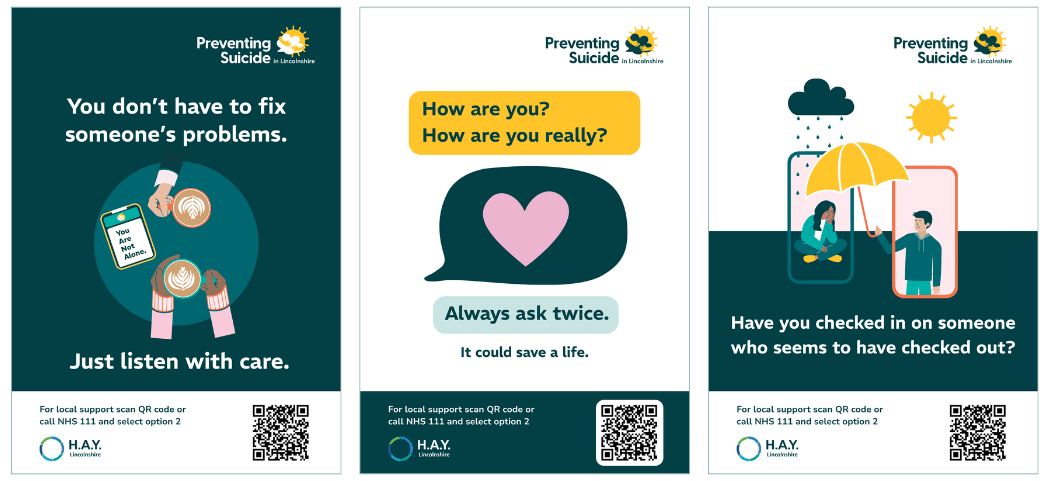
Importantly, the signs are designed for a wide range of settings - workplaces, pubs, gyms, schools, hospitality venues, and community spaces - recognising that conversations about mental health should not only happen in clinical environments.
Kate described one sign featuring two clasped hands with the message: “Talking is the start. Take one day at a time.”
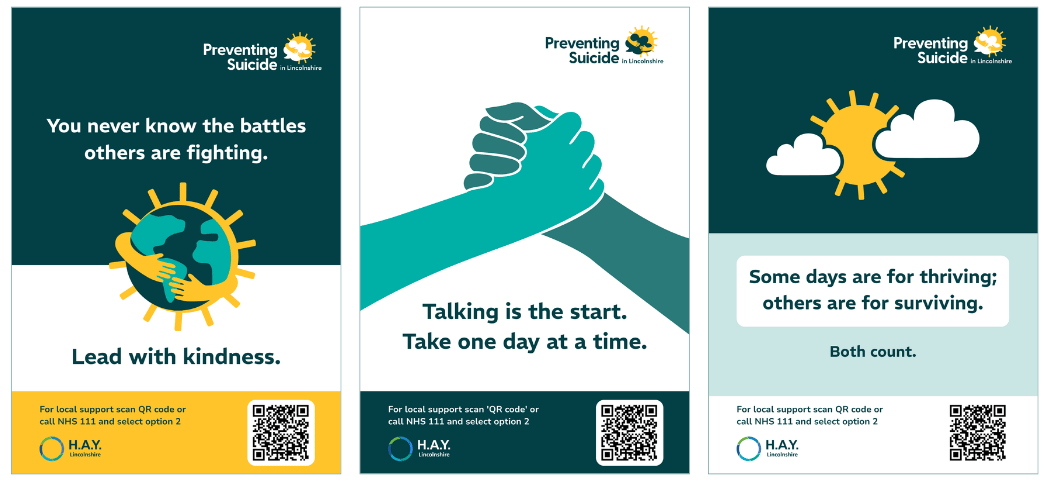
The campaign reflects a preventative, strengths-based approach. Rather than waiting until somebody reaches crisis point, it aims to create everyday opportunities for connection and support.
Ellie: “We want to use this signage campaign to spark conversations, but also to signpost and direct people who need support to support.”
For more information about the Preventing Suicide in Lincolnshire campaign, and how you can get involved, see the section at the bottom of this page.
Supporting people's confidence to have conversations
Alongside the signage campaign, the team has also co-produced a practical suicide prevention toolkit to help people feel more confident in supporting others.
The toolkit includes a simple “four-step conversation to save a life”, guidance on supporting neurodivergent individuals, and example prompts to help people start difficult conversations. It is designed to be visual, accessible, and easy to use.
Importantly, the toolkit also challenges common myths around suicide.
Ellie: “A very common misconception can be that talking to somebody about suicide could increase a person’s tendencies to think about suicide themselves. And we know that that’s not true.”
Again, lived experience shaped the design of the resource. Kate shared how forum members suggested including examples of what somebody could expect if they phoned a support service, recognising that even making a phone call can feel overwhelming for some people.
This is a powerful example of personalised care in practice: designing support around people’s real experiences, anxieties, and needs, rather than assumptions.
Creating spaces for healing and remembrance
The forum has also inspired another meaningful project: a Lincolnshire memorial quilt as part of the national Speak Their Name campaign. Families and individuals bereaved by suicide create squares that are stitched together into a large memorial quilt.
For Di and Kev, the workshops linked to the quilt are already becoming important spaces for connection and healing.
Di: “People were chatting about their experiences while they’re sat there sewing or drawing or creating whatever they’re creating. And it was just so good to listen to people’s stories and to give them a platform as well to talk about their feelings.”
The project highlights how creativity, community and shared experience can support emotional wellbeing in ways traditional services sometimes cannot.
One conversation can make a difference
Throughout the podcast, one message came through clearly: even small actions can have enormous impact.
Kev: “If it prevents one suicide, it has been worthwhile.”
The conversation also reinforced the wider ripple effect of suicide - on families, friends, workplaces, and communities. Preventing suicide is not only about reducing statistics; it is about protecting relationships, supporting communities, and helping people feel valued and connected.
Conclusion
The work happening across Lincolnshire shows what becomes possible when services move beyond traditional approaches and genuinely work alongside people with lived experience.
By listening carefully, building relationships, and creating compassionate spaces for conversation, Lincolnshire’s suicide prevention work is becoming more human, more accessible, and more effective.
At its heart, this is what personalised and strengths-based care is all about: recognising people as experts in their own lives, valuing lived experience, and creating support that starts with compassion and connection.
As Kate reflected, the aim is simple but powerful — to “make sure that ultimately we get it right.”
More about the Preventing Suicide in Lincolnshire signage campaign
These Preventing Suicide in Lincolnshire resources have been developed to strengthen our countywide approach to preventing suicide and to support communities, organisations, and individuals.
About the Signage Campaign
The signage has been created in partnership with the Lincolnshire Suicide Prevention Lived Experience Forum, ensuring that every message reflects compassion, hope, and authenticity.
The campaign includes a series of supportive message signs designed to:
- Encourage simple, meaningful actions such as checking in and listening.
- Promote early intervention and compassionate conversations.
- Reduce stigma and normalise talking about mental health.
- Connect individuals to help via QR codes linking to local and national support.
The signs use clear, accessible language and strong, intuitive visual cues such as umbrellas, speech bubbles, sunlight, and supportive gestures.
Messages such as “Always ask twice,” “Just listen with care,” and “Some days are for thriving; others are for surviving” are deliberately chosen to resonate widely and support everyday wellbeing.
Why this campaign matters
The campaign has been shaped by lived experience insight. It aims to:
- Create safer, more supportive public spaces.
- Encourage everyday acts of kindness and connection.
- Provide clear pathways to help.
How you can support the campaign
- Display the signage at your sites where appropriate and visible (download the Preventing Suicide in Lincolnshire Campaign signage installation guide).
- Promote the campaign through your communication channels.
- Use the QR codes to ensure people can easily access support.
- Embed the messages into your everyday practice and wellbeing initiatives.
Your support is vital in helping us spread these messages across Lincolnshire and in ensuring that people who may be struggling know that help, hope, and connection are always available.
If your organisation would like to support this campaign, please complete the attached Microsoft Form. Once submitted, you will receive a campaign resource pack containing the signage and supporting materials to enable you to display them across your sites.
Whilst we are happy to provide hard copies, downloadable versions are available via the H.A.Y plus professional hub.
If you do display any of the signs within your organisation, we would greatly appreciate feedback you may have or that you receive.
To stay up to date with our suicide prevention work across Lincolnshire, follow us on LinkedIn: Preventing Suicide in Lincolnshire
Thank you for your ongoing commitment to suicide prevention across our communities.
Kind regards,
The Lincolnshire Suicide Prevention Team- Lincolnshire County Council.


